How Houseplants Purify Indoor Air
Thomas Redding The air inside your home is not as clean as you think. According to the U.S. Environmental Protection Agency, indoor air can be 2 to 5 times more polluted than outdoor air — and in some cases, up to 100 times worse. We spend approximately 90% of our time indoors, which means the quality of the air we breathe at home has an enormous and largely underappreciated impact on our long-term health.
The good news: houseplants can help. NASA's landmark Clean Air Study demonstrated that certain houseplants remove significant quantities of harmful toxins from indoor air. But how exactly does this work? Which plants are most effective? How many do you need? And where should you place them for maximum benefit? This guide answers all of those questions with the science to back it up.
What's Actually in Your Indoor Air?
The primary indoor air pollutants that houseplants address are volatile organic compounds (VOCs) — invisible gases released by everyday household products and materials. The most common and harmful indoor VOCs include:
- Formaldehyde — Released by pressed wood furniture, MDF, carpets, insulation, and paper products. A known human carcinogen present in virtually every home.
- Benzene — Found in tobacco smoke, paint, varnish, glue, and detergents. A known human carcinogen linked to leukemia.
- Trichloroethylene — Released by dry-cleaned clothing, paint removers, and adhesives. Linked to liver and kidney damage.
- Xylene — Found in paint, varnish, lacquer, and rubber. Causes headaches, dizziness, and respiratory irritation.
- Ammonia — Present in cleaning products and fertilizers. Irritates the respiratory tract, eyes, and skin.
- Acetone — Found in nail polish remover and some cleaning products. Causes headaches and respiratory irritation.
The NASA Clean Air Study — What It Actually Found
In 1989, NASA scientist Dr. B.C. Wolverton conducted a landmark study testing 19 common houseplants in sealed chambers containing specific VOCs. The findings were significant: many common houseplants demonstrated measurable ability to remove VOCs from enclosed air. The study recommended approximately one plant per 100 square feet for meaningful air purification.
The study was conducted in sealed chambers — not typical homes with open windows and HVAC systems. In real-world conditions, you need more plants to achieve the same effect. However, the fundamental finding — that houseplants remove VOCs from indoor air — has been replicated in multiple peer-reviewed studies and is well-established science.
How Houseplants Purify Air — The Science of Phytoremediation
1. Leaf Absorption (Stomatal Uptake)
Plants absorb gases through tiny pores in their leaves called stomata. During photosynthesis, these pores also absorb VOCs from surrounding air, which are then transported to the roots.
2. Root Zone Microbial Breakdown
This is the most important mechanism. Plant roots host a rich community of soil microorganisms that metabolize VOCs into harmless byproducts, using them as a carbon source. The soil and root zone are actually more important for air purification than the leaves alone.
3. Leaf Surface Absorption
Particulate matter — dust, pollen, fine particles — settles on leaf surfaces and is removed from the air. Plants with large, textured leaf surfaces are most effective at trapping particulates.
4. Transpiration and Humidity Regulation
Plants release water vapor through transpiration, raising indoor humidity. Higher humidity causes airborne dust and particulates to settle more quickly and improves respiratory comfort.
5. Oxygen Production
Plants absorb CO₂ and release oxygen through photosynthesis. CAM plants — Snake Plants, Orchids, Aloe Vera, Bromeliads — do this at night, making them particularly valuable in bedrooms.
The Best Air-Purifying Houseplants — Shop Our Collection
Best for Formaldehyde Removal
- Philodendron — Top performer for formaldehyde in the NASA study. Fast-growing and adaptable. Browse our Philodendron Choco Empress and Philodendron Dragon Tail. Toxic to pets.
- Spider Plant — Highly effective formaldehyde remover. Non-toxic to pets and humans — the safest effective air purifier available. Shop our Spider Plant 'Bonnie' and Spider Plant Hawaiian.
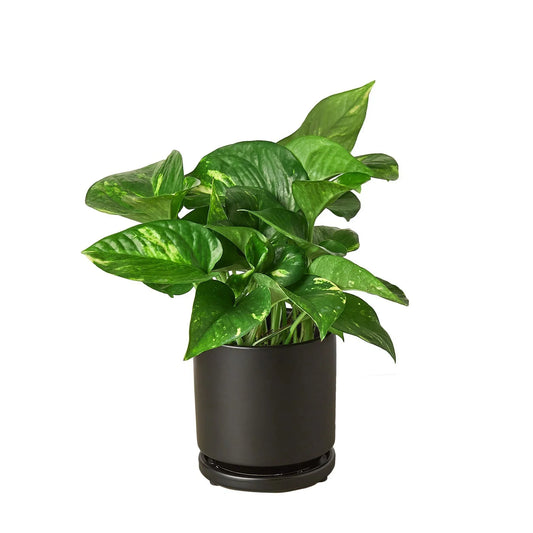
- Pothos — Effective and extremely easy to grow. Shop our Pothos 'Cebu Blue', Pothos 'Silver Streak Variegated', and Pothos 'Albo Variegata'. Toxic to pets.
- Snake Plant — Removes formaldehyde and produces oxygen at night. Shop our Snake Plant 'Jaboa', Snake Plant Sayuri, and Snake Plant Starfish. Mildly toxic to pets.
Best for Benzene Removal
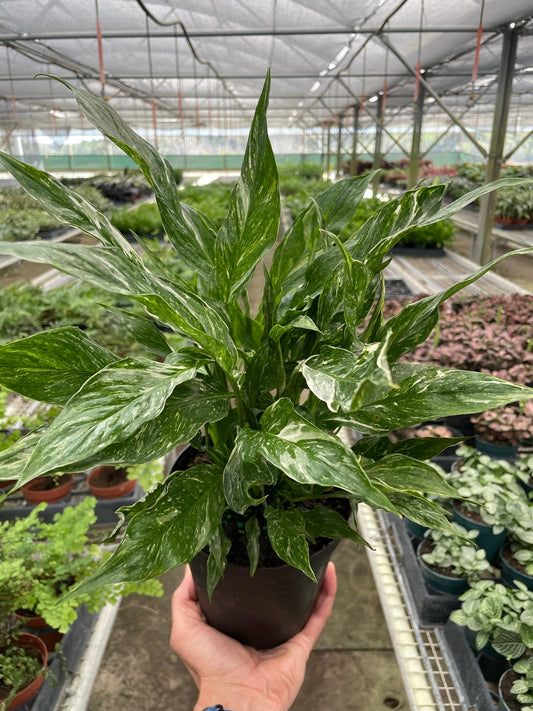
- Peace Lily — The top performer in the NASA study. Removes formaldehyde, benzene, trichloroethylene, ammonia, and acetone — the most comprehensive air purifier available. Shop our Peace Lily (Spathiphyllum) and Peace Lily Variegated Jessica. Toxic to pets.
- Snake Plant — Removes benzene alongside formaldehyde. Mildly toxic to pets.
- Pothos — Effective benzene remover. Toxic to pets.
Best for Xylene Removal
- Spider Plant — Removes xylene effectively. Non-toxic to pets and humans.
- Pothos — Effective xylene remover. Toxic to pets.
Best for Ammonia Removal
- Peace Lily — One of the few plants shown to remove ammonia from indoor air. Toxic to pets.
Most Comprehensive Air Purifiers (Multiple Pollutants)
- Peace Lily — Removes 5 pollutants. The single most comprehensive air-purifying houseplant. Toxic to pets.
- Philodendron — Outstanding formaldehyde remover. Toxic to pets.
- Spider Plant — Removes formaldehyde and xylene. Best choice for pet and child-friendly homes. Non-toxic.
- Pothos — Removes formaldehyde, benzene, and xylene. Extremely easy to grow. Toxic to pets.
- Snake Plant — Removes formaldehyde and benzene, produces oxygen at night. Mildly toxic to pets.
- Monstera — Large fenestrated leaves provide significant surface area for air purification. Shop our Monstera 'Split-Leaf' and Monstera 'Mint'. Toxic to pets.
How Many Plants Do You Need?
The NASA study recommended one plant per 100 square feet — roughly 15 plants for a 1,500 sq ft home. Plants work best as part of a comprehensive strategy alongside good ventilation and low-VOC materials.
Practical recommendations:
- At least one medium-to-large plant per room as a baseline
- Prioritize bedroom, living room, and home office
- Choose larger plants with more leaf surface area
- Cluster plants together for a more humid, effective microclimate
- Open windows when outdoor air quality is good; use quality HVAC filters
Where to Place Air-Purifying Plants
Bedroom: Snake Plant (oxygen at night) + Pothos or Peace Lily for VOC removal. Keep toxic plants out of reach of pets.
Living Room: Large statement plants — Monstera, Pothos, Peace Lily. Most furniture and textiles off-gas here.
Home Office: Spider Plant or Pothos near printer and desk. Plants also improve concentration and productivity.
Nursery: Non-toxic only — Spider Plant. Never place toxic plants in a nursery.
Kitchen: Peace Lily (out of reach) or Spider Plant for ammonia and formaldehyde removal.
Bathroom: Peace Lily and Spider Plant thrive in humidity and remove VOCs from cleaning products.
Tips for Maximum Air Purification
- Keep leaves clean. Wipe monthly with a damp cloth — dust blocks stomata and reduces effectiveness.
- Don't overwater. Mold in soil releases spores that counteract air purification benefits.
- Use quality potting mix. The soil microbiome breaks down VOCs — healthy soil = better purification.
- Choose larger plants. More leaf surface area = more VOC absorption.
- Provide adequate light. Struggling plants don't photosynthesize efficiently and purify less effectively.
- Repot every 1–2 years into fresh potting mix to maintain root zone microbial activity.
The Bottom Line
Houseplants genuinely purify indoor air through phytoremediation — absorbing VOCs through their leaves and breaking them down in the root zone. The NASA Clean Air Study and subsequent research confirm that specific plants effectively remove formaldehyde, benzene, xylene, trichloroethylene, and ammonia from indoor air.
Ready to start purifying your home's air? Browse our full collection of live, healthy air-purifying houseplants — all shipped nationwide with our Arrive Alive Guarantee.
For the complete Plants & Your Health overview, visit: Health Benefits of Houseplants — The Complete Guide.