Houseplants and Mental Health
Thomas ReddingCan Houseplants Really Improve Your Mental Health?
The connection between plants and mental wellbeing isn't just anecdotal — it's one of the most consistently replicated findings in environmental psychology. Study after study shows that living with houseplants reduces anxiety, lifts mood, decreases symptoms of depression, improves focus and cognitive function, and creates a measurable sense of calm that persists throughout the day. The mechanisms behind these effects are real, specific, and worth understanding — because once you know why plants work, you'll never look at your houseplant collection the same way again.
Yes — houseplants genuinely improve mental health through multiple documented pathways. The biophilia effect activates the parasympathetic nervous system near plants, reducing anxiety and stress hormones within minutes. Contact with soil microbes (Mycobacterium vaccae) stimulates serotonin production — the same neurotransmitter targeted by antidepressants. Studies show cortisol reductions of up to 68% after plant interaction. Caring for plants creates routine, purpose, and present-moment focus — all clinically proven buffers against anxiety and depression. Plants also improve indoor air quality by removing VOCs linked to mood disruption and cognitive impairment. The best plants for mental health include Pothos, Calathea, Snake Plant, Monstera, Peace Lily, and Lavender. Even 1–2 plants in your home produce measurable mood improvements within days.

🌿 Plants Mentioned in This Article
📚 More From Plants & Your Health
- Health Benefits of Houseplants — The Complete Guide
- Houseplants and Heart Health
- Houseplants and Mental Health — You are here
- Houseplants and Lung Health — coming soon
How Does the Biophilia Effect Affect Your Mental Health?
Biophilia — our innate biological drive to connect with nature — isn't a soft concept. It's hardwired into our nervous systems after millions of years of evolution in natural environments. When we're surrounded by plants, our brains register safety, abundance, and calm. When we're in sterile, plant-free spaces, our nervous systems register the opposite. The result is measurable: higher cortisol, higher anxiety, lower mood, and reduced cognitive function in plant-free environments compared to plant-rich ones.
A landmark study from the National Institutes of Health found that participants who spent time in plant-enriched environments reported significantly lower anxiety, lower perceived stress, and higher positive affect than those in plant-free spaces — even when the time spent was brief. The effect was immediate and didn't require any interaction with the plants. Just being near them was enough to shift the nervous system toward calm.

What Is the Soil Serotonin Connection?
This is one of the most fascinating discoveries in plant-mental health research, and most people have never heard of it. Soil contains a naturally occurring bacterium called Mycobacterium vaccae. When humans come into contact with soil — through gardening, repotting, or even just touching soil — this bacterium enters the body and triggers serotonin production in the brain.
Serotonin is the neurotransmitter most closely associated with mood regulation. It's the same chemical targeted by SSRIs — the most commonly prescribed class of antidepressants. The difference is that soil microbes stimulate your body to produce serotonin naturally, with no side effects. Researchers at the University of Colorado found that injecting M. vaccae into mice produced antidepressant-like effects and improved learning ability. Subsequent human studies confirmed that exposure to soil produces measurable mood improvements.
This means that repotting your plants, working with fresh soil, and getting your hands dirty isn't just satisfying — it's literally producing antidepressant compounds in your brain. Our complete houseplant health guide covers more of these lesser-known mechanisms in detail.
🪨 The Cortisol Numbers Are Real
Multiple studies have measured cortisol — your primary stress hormone — before and after plant interaction. The results are striking. One study found cortisol reductions of up to 68% after participants engaged in indoor plant care for just 15 minutes. Another found that simply viewing plants through a window reduced cortisol compared to viewing urban scenes. These aren't marginal effects — they're significant physiological shifts produced by something as simple as tending to a plant on your desk.
How Does Caring for Plants Help Anxiety and Depression?
Beyond the biochemistry, there's a psychological dimension to plant ownership that deserves serious attention. Anxiety and depression both thrive in environments of low structure, low purpose, and low present-moment engagement. Plant care is a natural antidote to all three.
Caring for plants creates routine — regular watering schedules, seasonal repotting, fertilizing cycles. Routine is one of the most clinically proven interventions for both anxiety and depression. It provides structure that the anxious or depressed brain desperately needs but struggles to create on its own.
Plant care also creates purpose. Watching something you tend to grow and thrive produces a sense of accomplishment and efficacy — the belief that your actions matter and produce results. This is directly counter to the learned helplessness that underlies much of depression.
And plant care is inherently mindful. Checking soil moisture, inspecting leaves for pests, pruning dead growth — these activities pull you into the present moment in a way that's almost meditative. The NIH has published research showing that horticultural therapy — structured plant care as a therapeutic intervention — produces significant improvements in anxiety, depression, and overall psychological wellbeing.

Which Houseplants Are Best for Mental Health?
The best plants for mental health combine strong visual calming effects, low-stress care requirements, and in some cases direct biochemical benefits. Here's what to reach for.
Pothos
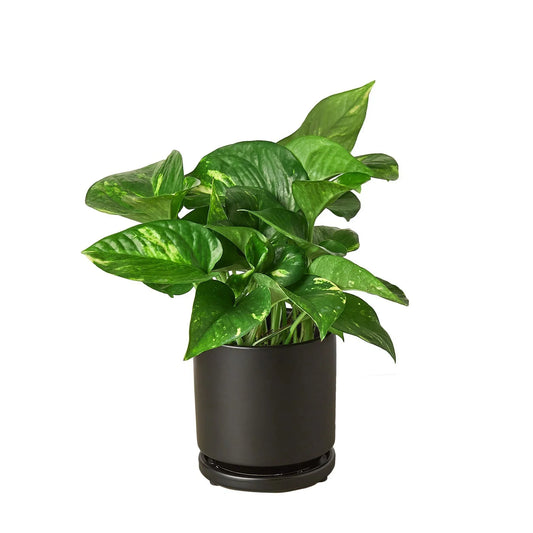
The Pothos is the quintessential mental health plant. It's nearly impossible to kill, grows visibly fast (which is deeply satisfying), trails beautifully, and tolerates low light and irregular watering without complaint. There's something genuinely calming about a plant that forgives your worst weeks. When life gets hard and your plant care routine slips, Pothos is still there, still growing, still green. That kind of unconditional resilience is oddly comforting.
Calathea
Calathea is the mindfulness plant. Its dramatic, patterned leaves move throughout the day in response to light — a phenomenon called nyctinasty — and its visual complexity rewards slow, attentive observation. Calatheas are non-toxic, pet-safe, and thrive in lower light conditions, making them ideal for bedrooms and living rooms. Caring for Calathea teaches patience and attentiveness, two qualities that directly counter anxiety.
Snake Plant
The Snake Plant is the plant for people who feel overwhelmed by the idea of plant care. It can go weeks without water, tolerates low light, and produces oxygen at night — supporting the sleep quality that is foundational to mental health. Improving sleep is one of the fastest ways to improve mood and reduce anxiety, and a Snake Plant in your bedroom works on that every night.
Monstera
The Monstera brings the jungle indoors in a way that few other plants can match. Its large, dramatic leaves create an immersive biophilic environment — the kind that produces the deepest nervous system responses. Monsteras are also fast growers with visible weekly progress, which provides that ongoing sense of nurturing success that benefits both anxiety and depression.
Peace Lily
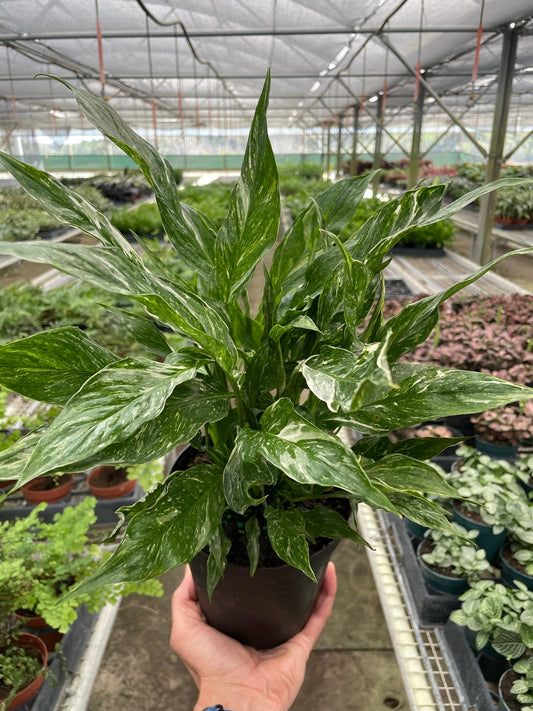
The Peace Lily is one of the few plants that communicates clearly — it droops dramatically when it needs water and perks back up within hours of being watered. That feedback loop creates a satisfying cause-and-effect relationship that's deeply engaging for anxious minds that crave control and predictability. It also removes the broadest range of air pollutants of any common houseplant. Keep away from pets.
Spider Plant
The Spider Plant is joyful. It produces cascading babies — plantlets that dangle from long stems — that you can propagate, share, and gift. The act of propagating and giving plants to others has its own mental health dimension: generosity, connection, and the satisfaction of growing something from nothing. Non-toxic and pet-safe.
🐾 Pet Safety Note
Peace Lily, Pothos, and Monstera are toxic to cats and dogs. For pet-safe mental health plants, choose Calathea, Spider Plant, or Snake Plant — all non-toxic and equally effective for mood and anxiety support.
Where Should You Put Plants for the Best Mental Health Benefits?
Placement matters more than quantity. The goal is consistent, daily exposure in the spaces where you spend the most time and where your mental state matters most.
Bedroom: This is your most important placement. Sleep quality is the single most powerful lever for mental health, and plants that improve sleep — like Snake Plant (night oxygen) and Calathea (calming visual presence) — belong here. One or two plants in your bedroom is enough.
Home office or workspace: Research from the NIH shows that plants in workspaces reduce stress, improve focus, and increase productivity by up to 15%. A Pothos on your desk or a Monstera in the corner of your office changes the psychological character of the space in ways that accumulate over time.
Living room: Your main social and relaxation space should feel like a sanctuary. A large Monstera or Areca Palm creates an immersive green environment that anchors the biophilia response throughout your waking hours. And if you want to see how all of this connects to your heart health, the connection is deeper than you'd expect.
Frequently Asked Questions
Can houseplants help with anxiety?
Yes — multiple studies confirm that living with houseplants reduces anxiety through the biophilia response, cortisol reduction, and the routine and purpose that plant care creates. Cortisol reductions of up to 68% have been measured after just 15 minutes of plant interaction. For anxiety specifically, low-maintenance plants like Pothos and Snake Plant are ideal because they don't add stress to your life.
Can houseplants help with depression?
Yes. Contact with soil microbes (Mycobacterium vaccae) stimulates serotonin production — the same neurotransmitter targeted by antidepressants. Plant care also creates routine, purpose, and a sense of accomplishment — three of the most powerful natural antidotes to depression. Horticultural therapy using structured plant care has been clinically validated as an effective intervention for depression.
How many plants do I need for mental health benefits?
Even 1–2 plants in the rooms where you spend the most time produce measurable mood and anxiety improvements. Quantity matters less than consistent daily exposure. Focus on your bedroom and primary living space first.
Which plant is best for anxiety?
Pothos is the top choice for anxiety because it's nearly impossible to kill, grows visibly fast, and requires minimal care — it won't add to your stress load. Calathea is a close second for its visual complexity and mindfulness-inducing qualities. For bedroom anxiety and sleep, Snake Plant is the strongest performer.
Is caring for plants a form of therapy?
Yes — horticultural therapy is a recognized clinical practice used in hospitals, rehabilitation centers, and mental health facilities worldwide. The NIH has published research confirming its effectiveness for anxiety, depression, PTSD, and cognitive decline. You don't need a therapist to access these benefits — a few plants and a watering can will do.
Do plants help with focus and productivity?
Yes. Studies show that plants in workspaces improve focus, reduce mental fatigue, and increase productivity by up to 15%. The mechanism is attention restoration — the brain recovers from directed attention fatigue faster when exposed to natural elements. A plant on your desk is one of the cheapest and most effective focus tools available.
What is the best plant for a bedroom for mental health?
Snake Plant is the top bedroom choice for mental health because it converts CO2 to oxygen at night, supporting better sleep quality — which is foundational to mental health. Calathea is a strong second for its visual calm and non-toxic, pet-safe profile. Both thrive in lower light conditions typical of bedrooms.