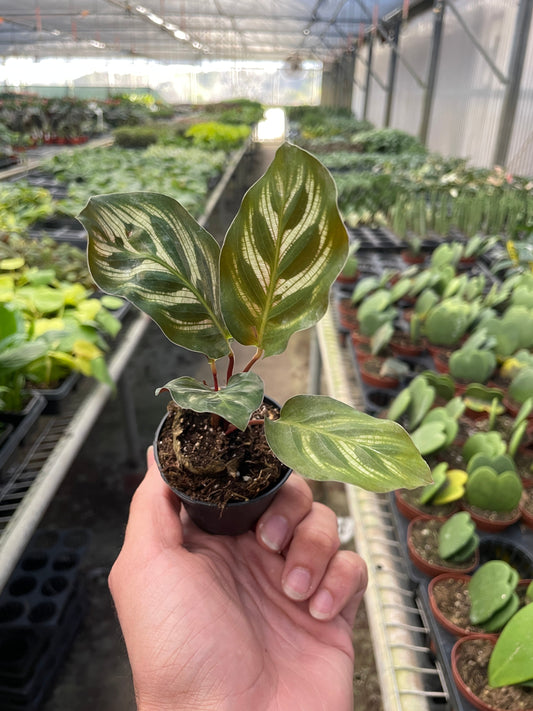
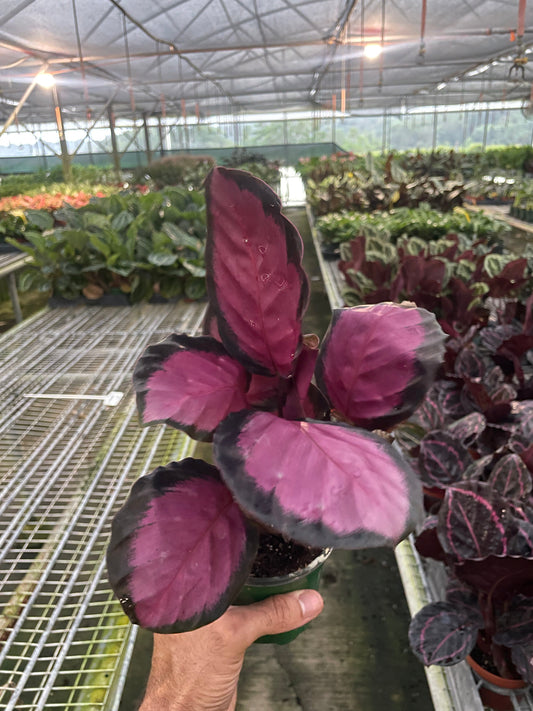
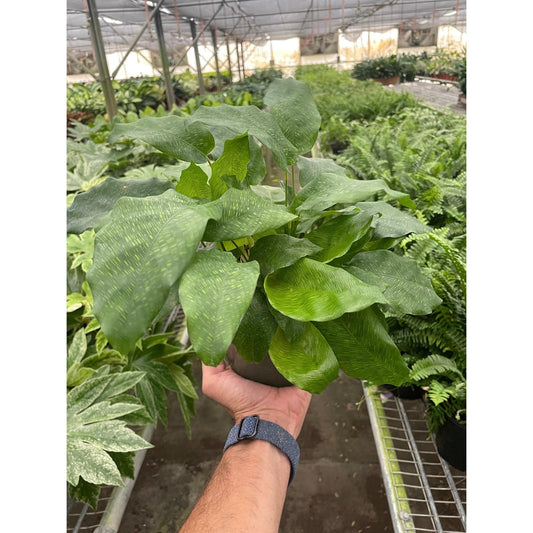
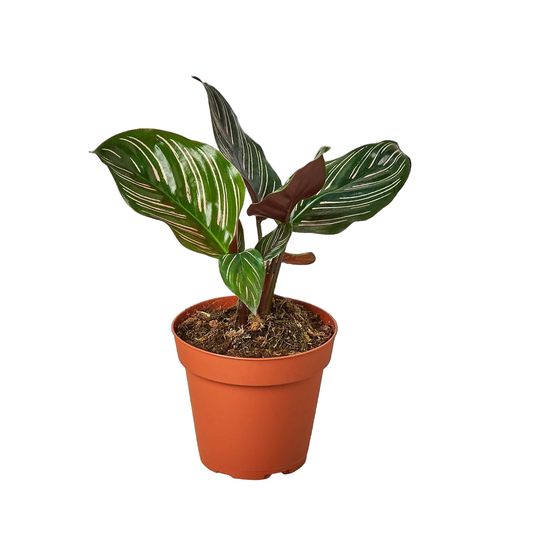
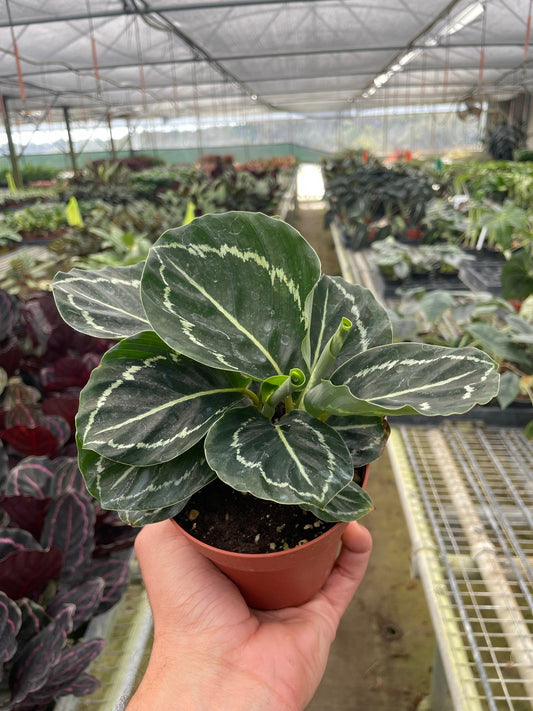
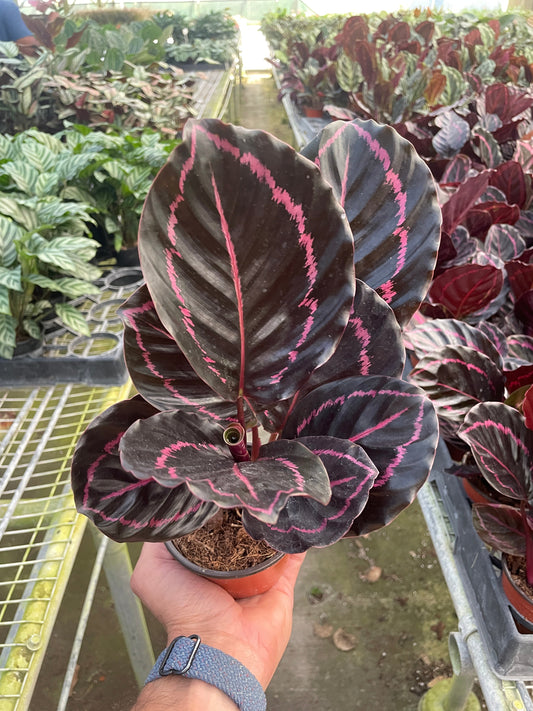
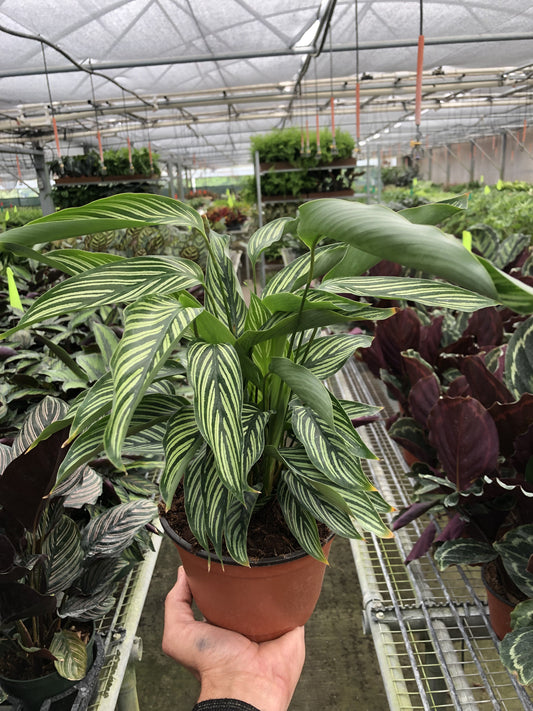
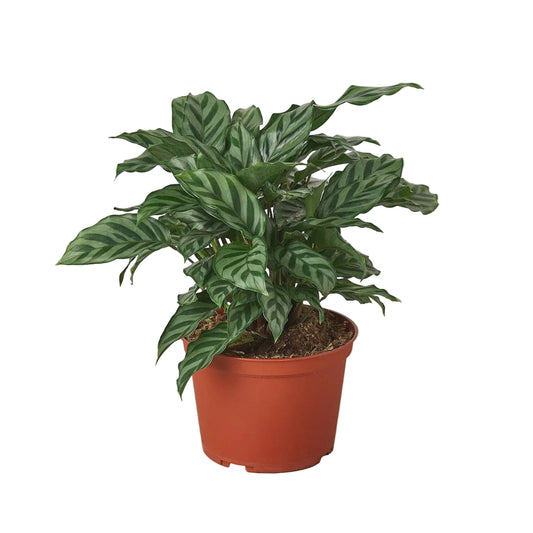
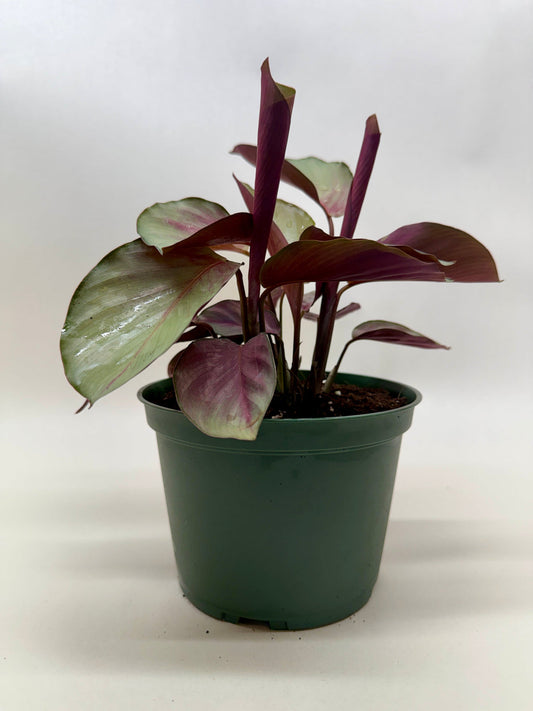
Shop pet-safe Calathea plants with bold patterned foliage, from the dark leaves and pink markings of Calathea ‘Dottie’ to the rounded, richly patterned leaves of ‘Medallion’. Explore Calathea ‘Ornata’ for delicate pinstripes or ‘Rattlesnake’ for long, wavy leaves. These tropical houseplants suit growers who enjoy keeping moisture and humidity consistent.
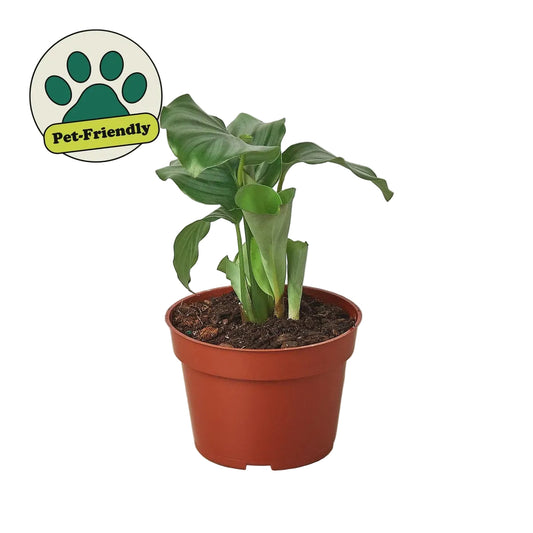
- Pet-safe patterned foliage: Non-toxic to cats and dogs, with pink markings, pinstripes, and wavy leaf edges to compare.
- Humidity-loving tropicals: Best in medium to bright indirect light with humid air and evenly moist, well-draining soil.
Calathea FAQs
Are Calathea plants safe for cats and dogs?
Yes, Calatheas are considered non-toxic to cats and dogs, so they are a good choice for pet-friendly homes. Keep plants out of reach where possible, since chewing any plant material can still upset a pet’s stomach.
What conditions help Calathea plants thrive indoors?
Calatheas thrive in medium to bright indirect light, steady warmth, and humid air. Keep the potting mix lightly moist without leaving roots in standing water, and avoid cold drafts. Use distilled, rain, or filtered water if your tap water is hard. Calatheas need more consistent attention than drought-tolerant houseplants.
Why are my Calathea leaves turning brown and crispy?
Brown, crispy edges are usually caused by dry air, inconsistent watering, or mineral buildup from tap water. Raise humidity with a humidifier or by grouping plants, keep the soil evenly moist, and switch to distilled or filtered water.
Can Calathea plants grow in low light?
Calatheas tolerate medium indirect light but do best in bright, indirect light. In very low light, growth slows and the leaf patterns can fade. Avoid direct sun, which scorches the leaves and bleaches the colors.
Why do Calathea leaves move up and down?
Calathea leaves fold upward at night and open during the day in a natural movement called nyctinasty. It’s normal and not a sign of a problem. Constantly curled leaves during the day, however, usually mean the plant needs more water or humidity.
-
Calathea Lancifolia ‘Rattlesnake’
Regular price From $16.15 USDRegular price -
-
-
-
-
-
-
-
-
-
-
-
Calathea Rufibarba ‘Furry Feather’
Regular price From $24.16 USDRegular price -
-
Calathea Roseopicta ‘Medallion’
Regular price From $24.16 USDRegular price -
-
Calathea Plants Variety Pack in 2-4" Pots
Regular price $42.01 USDRegular price