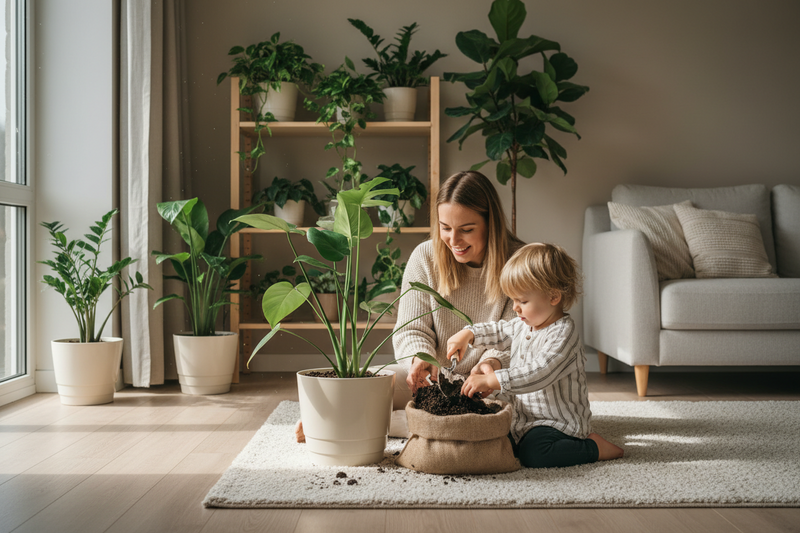
If you want a plant that genuinely glows, the Philodendron Moonlight delivers. Its broad, lance-shaped leaves emerge in a vivid chartreuse-yellow and slowly deepen to a rich lime green as they mature — giving the plant a layered, luminous quality that looks almost backlit in a bright room. Fast-growing, compact, and self-heading, it builds into a lush, full mound without needing a pole or trellis. One of the best indoor tropical houseplants for anyone who wants bold color without the complexity.
Fun fact: Philodendron Moonlight is a hybrid cultivar, not a species found in the wild. It was bred specifically for its intense yellow-green foliage and its compact, self-supporting growth habit — making it one of the most reliable color plants in the Philodendron family. The neon new-leaf color is most vivid in bright indirect light; in lower light, the leaves tend to emerge a deeper, more muted green. Think of it as a plant that rewards good placement.
Care Guide
Light: Bright, indirect light is ideal — this is what keeps those new leaves glowing chartreuse. Too little light and the color dulls; the plant may also become leggy reaching for more light. Avoid direct sun, which scorches the leaves.
Watering: Water when the top 1–2 inches of soil are dry. Keep the soil consistently moist but never soggy — overwatering leads to root rot. Reduce frequency in winter when growth slows.
Humidity & Temperature: Prefers humidity in the 40–65% range but adapts to average household levels. Ideal temps are 65°F–80°F (18°C–27°C). Keep away from cold drafts and AC vents.
Soil: A rich, loose, well-draining mix works best — standard potting soil amended with perlite and orchid bark or coconut coir is ideal. Always use a pot with drainage holes.
Fertilizer: Feed every 4–6 weeks during spring and summer with a balanced liquid houseplant fertilizer at half strength. Skip in fall and winter.
Repotting: Every 1–2 years in spring when rootbound. It's a fast grower, so check annually.
Maintenance: Wipe leaves with a damp cloth to remove dust and keep them looking their best. Prune any yellowing or damaged leaves to encourage new growth.
Troubleshooting
Yellow leaves: Almost always overwatering — let the soil dry out more between waterings.
Leggy growth: Not enough light — move it closer to a bright window.
Brown tips: Low humidity or inconsistent watering — boost humidity and check your watering routine.
Pests: Watch for mealybugs, spider mites, and scale. Treat with neem oil or insecticidal soap at the first sign.
Pro Tip: Place it somewhere it gets a few hours of bright morning light — an east-facing window is perfect. The color payoff is worth the placement effort.
Toxicity: Toxic to pets and humans if ingested. Keep out of reach of pets and children.
Available in multiple sizes. Ships live, healthy, and ready to glow.
I was I received multiple plants in my order and so pleased.They were much larger than I expected and in fabulous condition.
B
Alocasia Variegated Frydek Brandie Perry
The plant did not arrive in great shape. However, it was an alocasia and I did not add insulation so this is not on the seller (and we all know alocasia does not travel well anddddd they come back)
From start to finish the transaction was amazing. They gave me a discount for my next order even though I didn't ask for one because I knew the risks, and they continued to answer my questions and help me! Will def order again from them and would encourage others to as well!