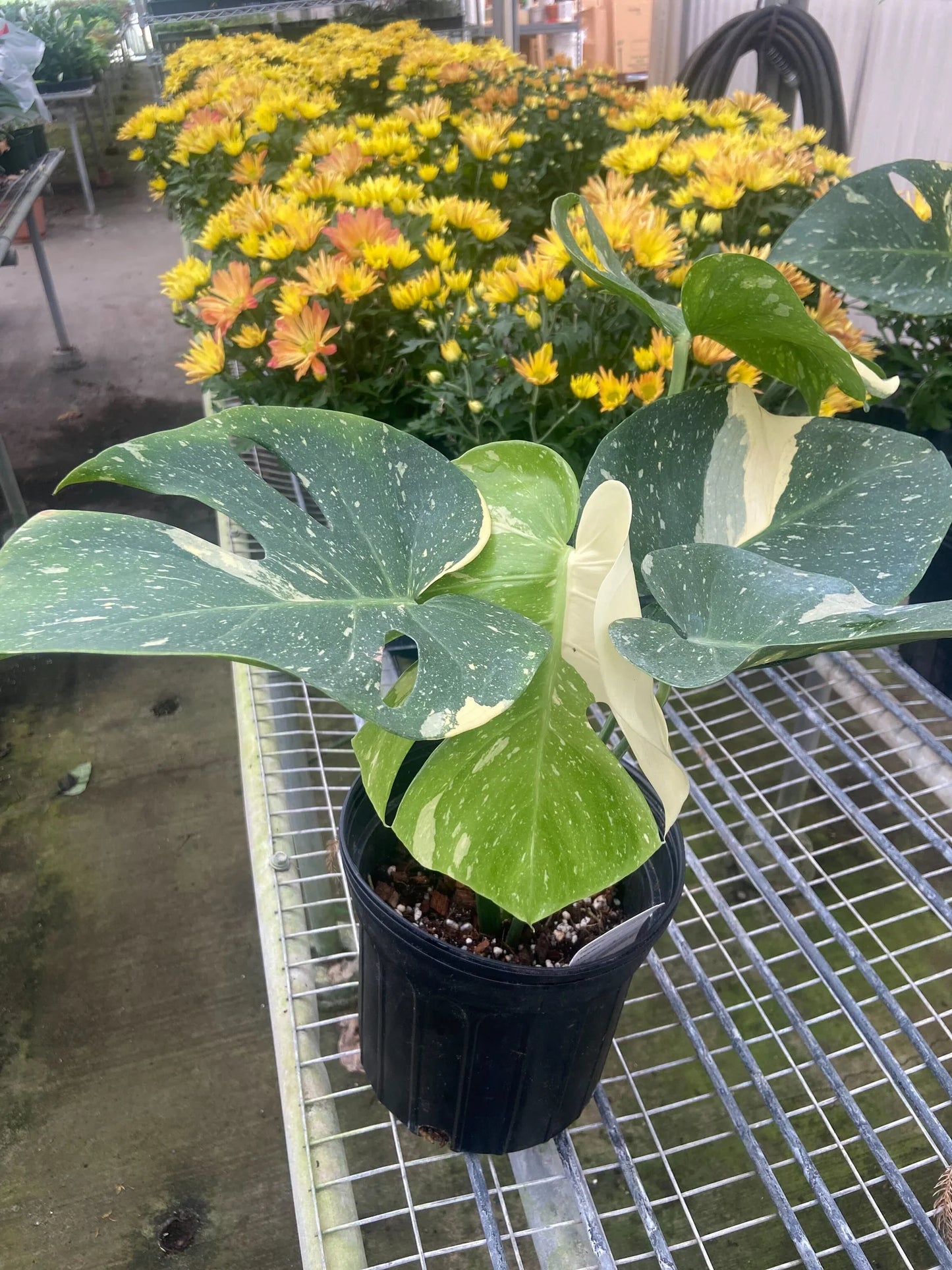
Monstera Thai Constellation
Monstera Thai Constellation
Buy 2 Get 3rd 25% Off
Couldn't load pickup availability
Buy Monstera Thai Constellation Online | Rare Variegated Monstera for Sale
The Monstera Thai Constellation (Monstera deliciosa 'Thai Constellation') is one of the most iconic and sought-after rare variegated houseplants in the world. Developed through tissue culture in Thailand, this collector aroid features large, dramatic split leaves splashed with permanent creamy-white and pale yellow variegation — like a night sky full of stars. Unlike other variegated Monsteras, the Thai Constellation's variegation is stable and consistent, making it one of the most reliable rare tropical plants you can buy online.
Plant Highlights
- Botanical Name: Monstera deliciosa 'Thai Constellation'
- Common Name: Thai Constellation, Thai Constellation Monstera
- Foliage: Large fenestrated leaves with stable creamy-white and pale yellow constellation-like variegation
- Variegation Stability: Tissue-cultured — stable, consistent variegation that won't revert to green
- Rarity: One of the most coveted collector aroids and rare tropical plants available online
- Growth Habit: Climbing vine — develops larger, more fenestrated leaves with age and support
Monstera Thai Constellation Care Guide
- Light: Bright indirect light is essential — variegated sections have less chlorophyll and need more light than standard Monsteras; an east- or west-facing window is ideal; avoid harsh direct afternoon sun which can scorch the pale variegation
- Water: Allow the top 50–75% of soil to dry between waterings; Thai Constellations are prone to root rot — never let them sit in soggy soil; alternate between top and bottom watering and always ensure full drainage
- Soil: Chunky, well-draining aroid mix — orchid bark, coco coir, perlite, and a small amount of potting soil; always use a pot with drainage holes
- Humidity: 50–60%+ preferred; use a humidifier or cluster with other tropical houseplants to maintain consistent humidity
- Temperature: 65–80°F (18–27°C); keep away from cold drafts, air vents, and air conditioning units
- Fertilizer: Balanced liquid fertilizer monthly during spring and summer growing season; avoid over-fertilizing which can stress variegated tissue
Propagation & Common Issues
- Propagation: Stem cuttings with at least one node; root in water or moist sphagnum moss — variegation is passed through cuttings
- Support: Provide a moss pole or trellis to encourage climbing and larger, more dramatic fenestrated leaves
- Root rot: Indicated by mushy stems or yellowing leaves — reduce watering immediately and check roots
- Brown edges: Usually low humidity, inconsistent watering, or too much direct sun
- Pests: Inspect regularly for spider mites and mealybugs, especially under leaves; treat with neem oil at first sign
- Maintenance: Wipe leaves monthly with a damp cloth or diluted neem oil to remove dust and deter pests
Pro Tips for a Thriving Thai Constellation
- Place in the brightest indirect light available — more light means more vibrant variegation and faster growth
- Mount on a moss pole early to encourage the large, fenestrated leaves this variety is famous for
- New leaves may emerge without splits — fenestrations develop as the plant matures, especially when climbing
- Keep humidity consistently above 50% — this is the single most important factor for healthy Thai Constellation growth
- Pairs beautifully with other rare collector aroids like Monstera Albo, Philodendron Pink Princess, and Alocasia varieties
Safety Notice
Monstera deliciosa contains calcium oxalates and is toxic if ingested by pets or children. Keep out of reach of cats, dogs, and little ones.
Your Monstera Thai Constellation ships fresh and healthy with our Arrive Alive Guarantee — expert-grown, carefully packaged, and delivered with Free Shipping Nationwide.
Share