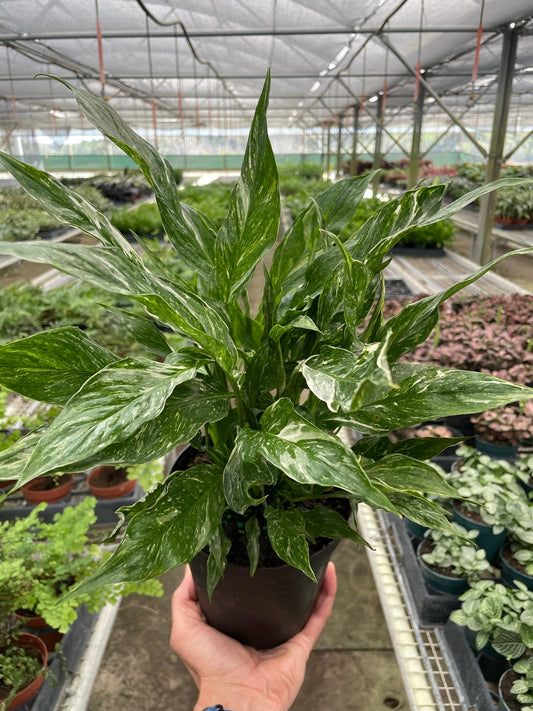
Peperomia are one of the most forgiving houseplants you can grow — until you put them in the wrong soil. Get the mix right and they're nearly indestructible. Get it wrong and you'll be fighting root rot, yellowing leaves, and slow decline no matter how carefully you water. The key is understanding what Peperomia actually are: semi-succulents with shallow, fine roots that need excellent drainage and only moderate moisture retention. Standard potting mix fails them on both counts.
 ]
]
What Is the Best Soil for Peperomia?
Peperomia need a light, airy, fast-draining mix that dries out relatively quickly between waterings. Their semi-succulent stems and leaves store water internally, so they're built to tolerate dry periods — but their shallow, fine roots have almost no tolerance for sitting in wet, compacted soil. The goal is a mix that drains freely within seconds of watering, retains just enough moisture to keep roots hydrated for 7–10 days, and stays loose and airy rather than compacting into a dense brick over time.
The best soil for Peperomia is 50% regular potting mix, 30% perlite, 10% coco coir, and 10% vermiculite. This mix drains fast enough to prevent root rot while retaining just enough moisture for Peperomia's fine, shallow roots. It works across all major Peperomia types — rosette, trailing, and upright varieties. For smaller or more delicate varieties, increase perlite to 40% and drop potting mix to 40% for even faster drainage. Never use straight potting mix, garden soil, or heavy peat-based mixes — all three compact over time and trap moisture at root level, which is the primary cause of Peperomia death indoors.
Peperomia Soil Ingredients: What Goes In and Why
Every ingredient in a Peperomia mix has a specific job. Understanding why each one is there helps you troubleshoot problems and adjust the mix for your specific conditions — whether you live in a humid climate where soil stays wet longer, or a dry climate where you're fighting the opposite problem.
| Ingredient | Amount | Role in the Mix |
|---|---|---|
| Regular Potting Mix | 50% | Base structure, nutrients, moisture retention |
| Perlite | 30% | Drainage, aeration, prevents compaction |
| Coco Coir | 10% | Lightweight moisture retention, root aeration |
| Vermiculite | 10% | Micro-moisture retention, keeps fine roots hydrated |
Regular Potting Mix (50%)
The base of the mix provides structure, a starting supply of nutrients, and the bulk of moisture retention. For Peperomia, any quality all-purpose potting mix works — avoid mixes labeled "moisture control" or "water retention" which are engineered to stay wet far longer than Peperomia can tolerate. The potting mix is also what gives the roots something to grip as the plant establishes. At 50%, it keeps the mix from becoming too gritty and free-draining to support healthy root growth, while staying light enough that perlite and coco coir can do their jobs without fighting against a dense base.
Perlite (30%)
Perlite is the most important amendment in this mix. These white volcanic glass beads create air pockets throughout the soil that allow water to pass through quickly rather than pooling around roots. At 30%, perlite keeps the mix from compacting over time — one of the biggest problems with standard potting mix used alone. It also improves oxygen flow to the root zone, which Peperomia need because their fine roots suffocate quickly in anaerobic, waterlogged conditions. If you live in a humid climate where your soil stays wet for two weeks or more between waterings, increase perlite to 40% and reduce potting mix to 40%.
Coco Coir (10%)
Coco coir adds lightweight moisture retention without the weight and compaction of peat moss. It's made from coconut husks and has a naturally fibrous structure that holds water in tiny pockets while still allowing air movement around roots — something peat moss can't do once it dries out and becomes hydrophobic. For Peperomia, coco coir at 10% prevents the mix from drying out so fast that fine roots desiccate between waterings, while staying light enough not to tip the mix toward staying too wet. It's also pH neutral and sustainable, making it a better long-term amendment than peat.
Vermiculite (10%)
Vermiculite is a heated mineral that expands into accordion-like flakes that hold moisture and nutrients in micro-pockets right at the root level. Unlike perlite, which primarily improves drainage, vermiculite retains moisture — but in a way that releases it slowly and evenly rather than pooling. At 10%, it specifically supports Peperomia's very fine, hair-like feeder roots that need consistent micro-moisture to absorb nutrients. If you tend to underwater or your home is very dry, vermiculite is the ingredient that gives you a margin of safety. If you tend to overwater, reduce vermiculite to 5% and increase perlite accordingly.
⚠️ What to avoid in Peperomia soil. Garden soil compacts immediately in a pot and drains almost nothing. Moisture-control potting mixes stay wet for weeks and cause chronic root rot. Straight peat-based mixes become hydrophobic when dry — water beads off the surface and runs down the sides of the pot without ever reaching roots. Any of these used alone will kill a Peperomia within a season.
Adjusting the Mix by Peperomia Variety
The base ratio works for most Peperomia, but some varieties have specific needs worth adjusting for.
| Variety Type | Examples | Mix Adjustment |
|---|---|---|
| Rosette | Watermelon, caperata, Rosso, argyreia | Standard ratio — 50/30/10/10 |
| Trailing | Hope, String of Turtles, scandens | Increase perlite to 35%, reduce potting mix to 45% |
| Upright / Bushy | obtusifolia, Ginny, Frost, Thailand | Standard ratio — 50/30/10/10 |
| Tiny / Miniature | Peperomia Piccolo Banda, Prostrata | Increase perlite to 40%, reduce potting mix to 40% |
Signs Your Peperomia Is in the Wrong Soil

Yellowing leaves starting at the bottom: Almost always overwatering compounded by soil that stays wet too long. Check the bottom leaves first — if they're turning yellow and the soil is still damp 10+ days after watering, your mix is holding too much moisture. Add more perlite next repot.
Mushy stem base: Root rot has already set in. Unpot immediately, trim all brown mushy roots with clean scissors, let the root ball air dry for a few hours, and repot into a fresh fast-draining mix. Reduce watering frequency significantly going forward.
Slow growth despite good light and regular watering: Compacted soil cutting off oxygen to the root zone. Even if the soil isn't soggy, a dense airless mix starves roots of oxygen and stalls growth. Repot into a fresh amended mix.
Water running straight down the sides of the pot: Soil has become hydrophobic — water isn't penetrating the root zone at all. This happens with old peat-based mixes that have dried out completely. Bottom watering can help temporarily, but repotting into fresh mix is the real fix.
Roots circling the bottom of the pot with no top growth: The plant is root bound AND the soil is exhausted of nutrients. Time to repot into fresh mix one pot size up.
💡 How often to refresh Peperomia soil. Repot every 1–2 years even if the plant hasn't outgrown its pot. Potting mix breaks down over time — it compacts, loses structure, and becomes less able to drain and aerate properly. Fresh mix every 1–2 years keeps roots healthy and gives the plant a nutrient reset without needing to size up the pot.
Frequently Asked Questions
Can I use cactus mix for Peperomia?
Yes, with amendments. Straight cactus mix drains too fast and dries out too quickly for most Peperomia, leaving fine roots desiccated between waterings. Mix 70% cactus mix with 20% coco coir and 10% vermiculite to add back just enough moisture retention without sacrificing drainage.
Can Peperomia grow in succulent soil?
Same answer as cactus mix — yes, amended. Succulent soil is engineered for plants that want long dry-out periods, and most Peperomia prefer to dry out only partially between waterings. Add coco coir and vermiculite to slow the dry-out rate.
Do Peperomia like acidic soil?
Peperomia prefer a slightly acidic to neutral pH — between 6.0 and 7.0. Standard potting mix falls in this range naturally. Coco coir is pH neutral. Perlite and vermiculite don't significantly affect pH. The standard mix described here keeps pH in the ideal range without any additional adjustments.
How do I know if my Peperomia needs repotting?
Roots coming out the drainage holes, water draining immediately without absorbing at all, or the plant becoming top-heavy and tipping are the three main signs. Peperomia actually prefer slightly snug pots — don't size up more than one pot size at a time or you risk the excess soil holding moisture the roots can't use.
Can I use moss as the base for Peperomia soil?
Sphagnum moss alone stays too wet for most Peperomia and encourages root rot. It works as a small amendment — up to 10% — in place of coco coir for varieties that prefer slightly higher humidity at the root zone, like some trailing types. Never use it as the primary medium.
What pot material is best for Peperomia soil health?
Terracotta is ideal because it's porous and wicks moisture away from the soil, which reduces the risk of overwatering. Plastic pots retain more moisture and require less frequent watering — fine if you use a very fast-draining mix and water sparingly. Avoid glazed ceramic without drainage holes entirely.
Ingredients & Supplies Used in This Mix:
🪨 Perlite Guide · 🌿 Regular Potting Mix Guide · 🥥 Coco Coir Guide · 🌱 Vermiculite Guide
🌿 Peperomia Care Guide · ✂️ Peperomia Propagation Guide · 🌺 Shop Peperomia Collection